
categories
All Categories
- Bitcoin
- Centralised Exchanges
- Crypto
- Crypto Asset Volatility
- Crypto Correlations
- Crypto Governance
- Crypto in the Portfolio
- Crypto Valuations
- DeFi
- ESG
- Ethereum
- Investment Highlight
- Regulation
- Security and Privacy
- Social Media Influence
- Stable Coins
- Traditional Finance and Crypto
- Uncategorized
- UNSDG
- Web 3.0
Authors
All Authors
From Lobbying to Licensing
by Quinn Papworth
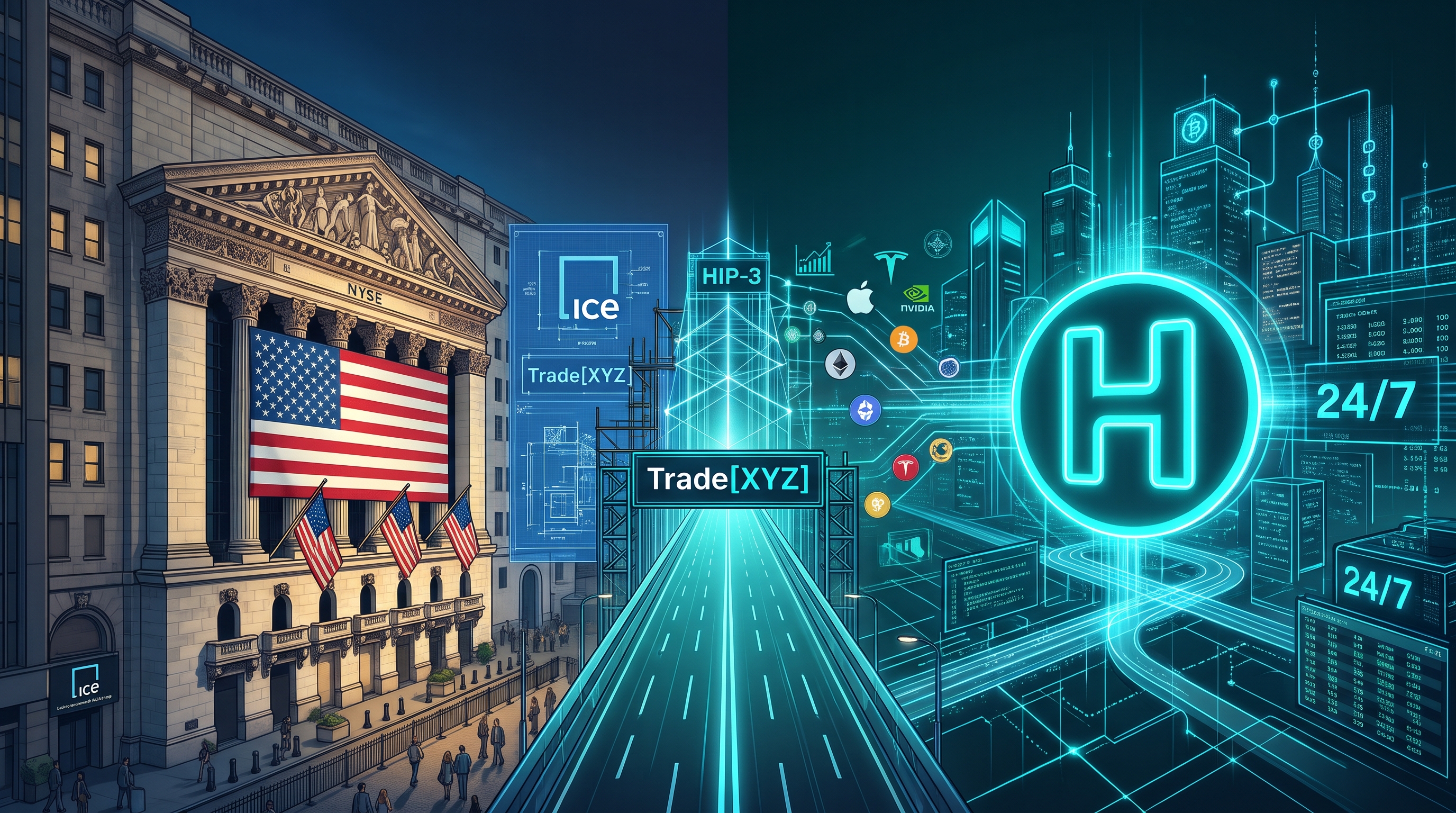
Six months after urging Washington to rein Hyperliquid in, the NYSE’s parent is building a US perpetual-futures venue on its rails, with Trade[XYZ] as the market designer.
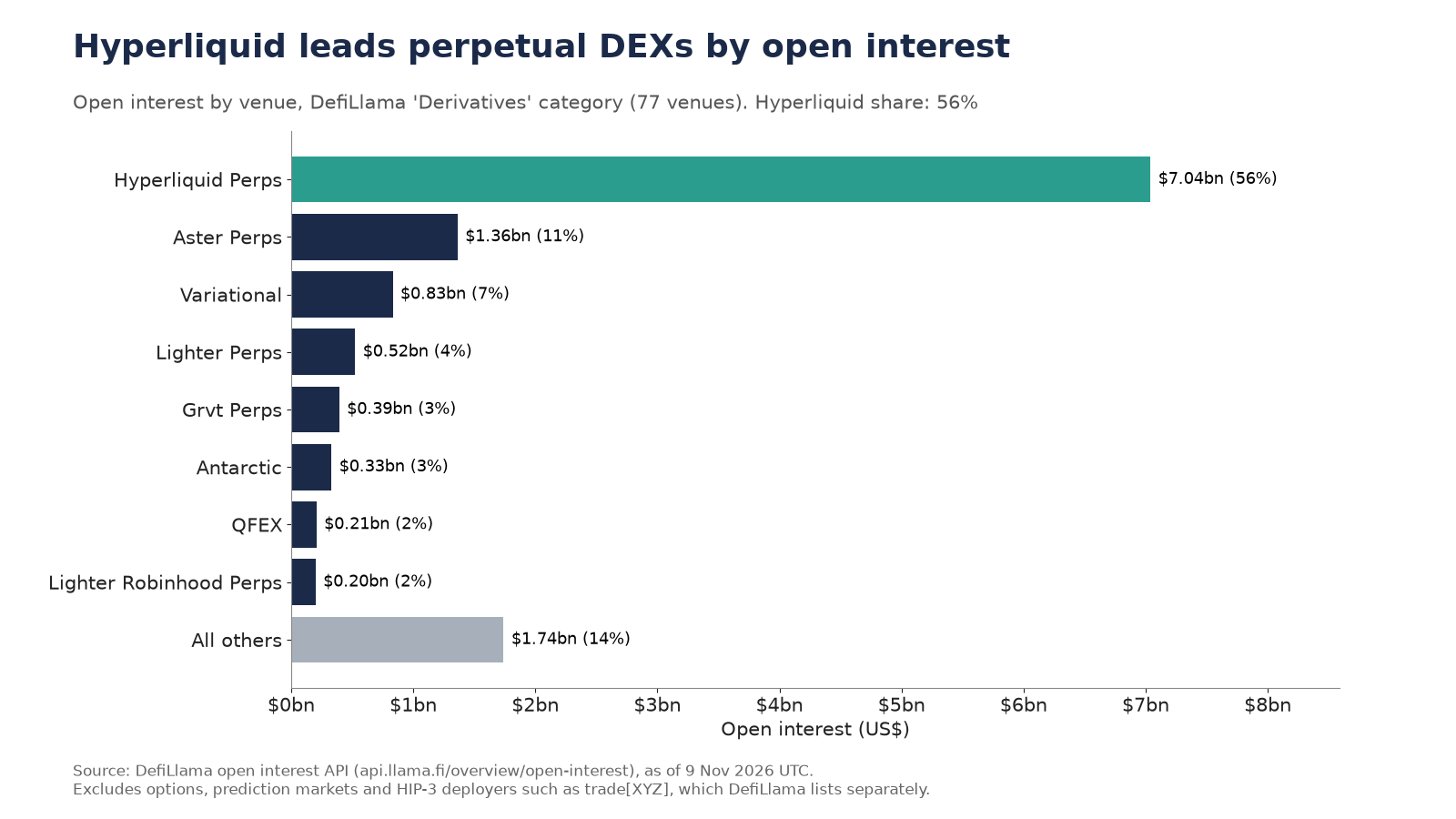
In May we wrote that Hyperliquid was no longer a curiosity. It was a problem for everyone else. CME Group and Intercontinental Exchange had urged the CFTC and Congress to bring the protocol under traditional oversight. The concerns were real: anonymous commodity contracts, sanctions risk, and policing a venue without KYC. So were the motives. An offshore venue listing oil, equities and indices was eating into a franchise that took years to approve products.
Six months later, ICE has chosen a different door. On 29 October it announced a definitive agreement with Trade[XYZ], the leading deployer of real-world-asset perpetuals on Hyperliquid, to bring those markets onshore in the United States, subject to regulatory approvals. The same incumbent that sought to contain Hyperliquid is now proposing to run regulated US perpetual markets on its infrastructure.
What was announced
The structure is clean. Hyperliquid supplies the underlying technology via HIP-3, the permissionless framework that lets builders deploy their own perpetual contracts. Trade[XYZ] designs and implements the products. ICE is the exclusive operator of Trade[XYZ]’s regulated markets and will establish a dedicated retail exchange and clearing structure for that purpose. It is also taking a strategic minority stake in Trade[XYZ]. Terms were not disclosed.
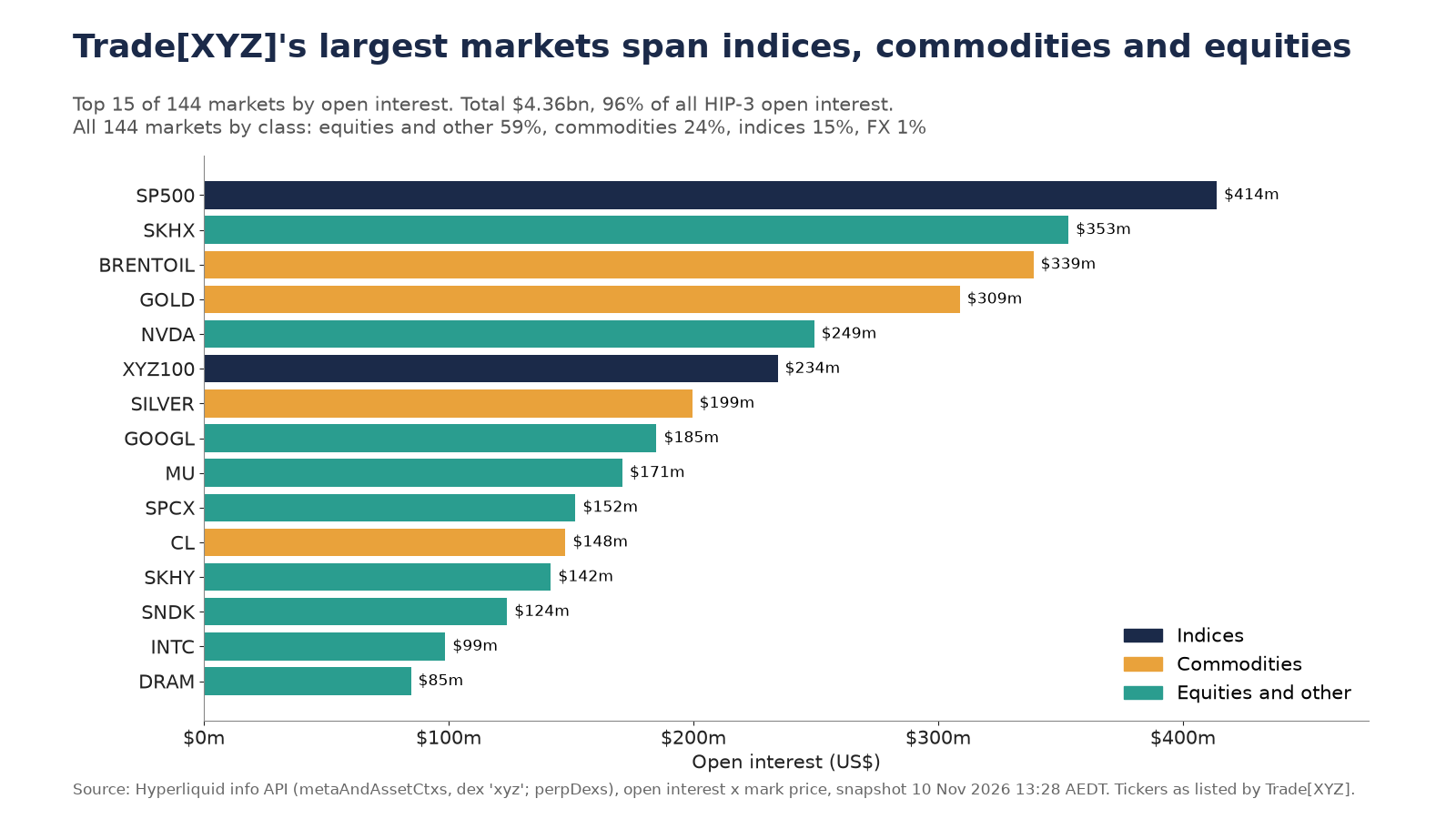
The product set covers perpetuals on cryptocurrencies, equities, indices, commodities and FX: short-duration, around-the-clock exposure for retail traders underserved by US-regulated venues. Access is expected through futures commission merchants, with KYC and AML. ICE says the new business will sit inside a separate, dedicated regulatory structure. That is deliberate. More than 99% of the activity on ICE’s markets comes from institutions, and the firm does not want a new product to change the character of its futures franchise. What it wants is a new pool of customers: traders who seek short-duration, 24/7 exposure and today find it mostly on offshore venues.
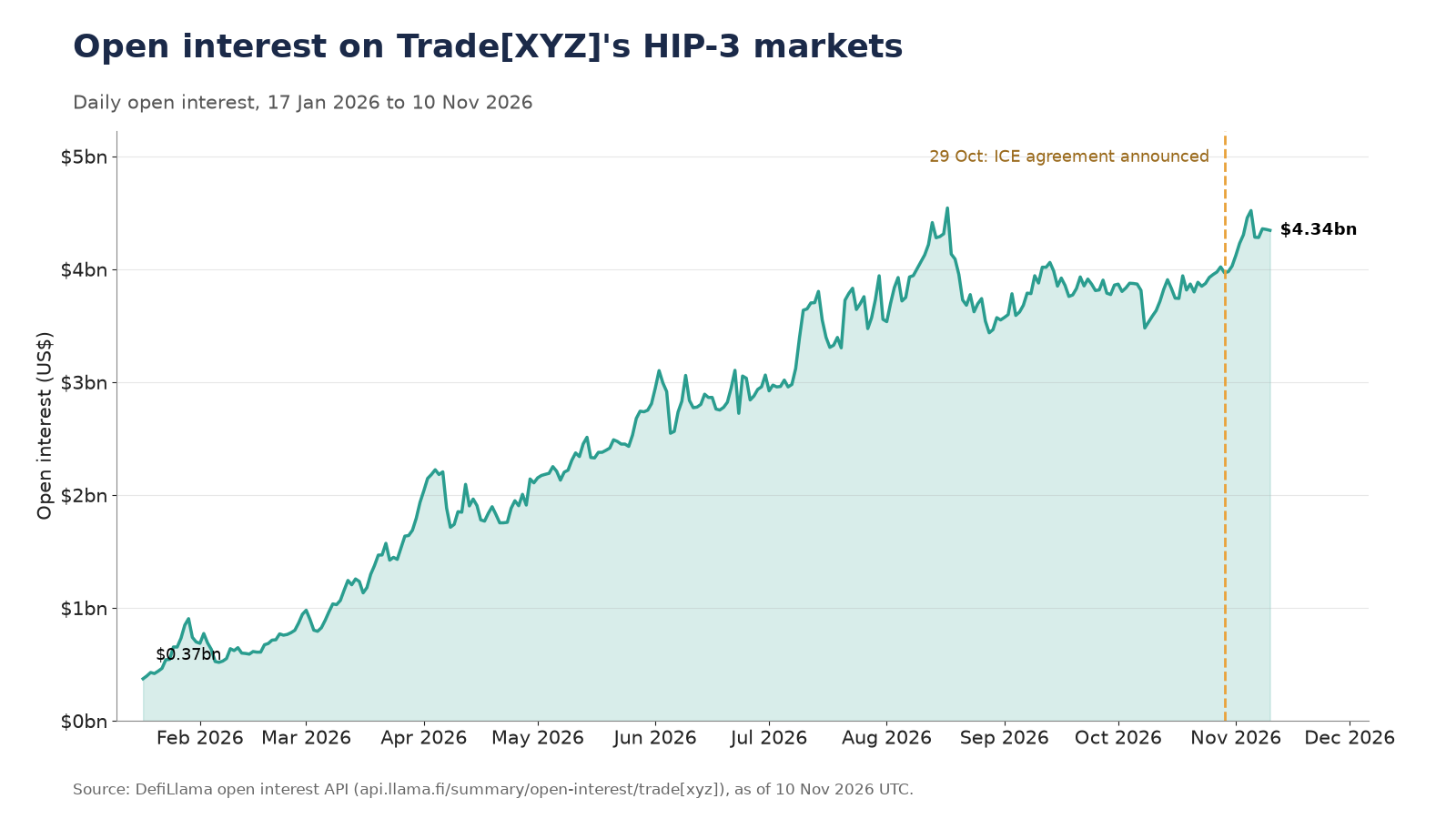
Still, the cast is familiar. In The Perpification Of Everything and again in The House That Perps Built, we flagged Trade[XYZ] as the runaway HIP-3 leader, the team behind 24/7 perpetuals on Tesla, Apple, Nvidia and a licensed S&P 500 contract. ICE is not inventing a partner. It is wrapping one that already works offshore.
Why perps belong onchain
The deeper story is phase three of perpification: the migration of perpetual swaps from crypto pairs into commodities, equities and other real-world assets. A perpetual needs continuous trading, a price feed and counterparties. It does not need the full custody and securities-law stack that tokenising the underlying share requires. As we put it then: “Tokenisation is an institutional upgrade; perpification is a retail democratisation. They will probably coexist, but the latter is moving faster.”
ICE’s own language lands in the same place. Jeffrey Sprecher, its chair and chief executive, framed the opportunity as retail traders “seeking short-duration exposure, often around the clock,” and said the firm intends to “find retail traders where they want to be.”
What it means for Hyperliquid
In May we sketched three strategic doors for Hyperliquid: register onshore and accept US licensing; remain offshore and grow on global flows; or push decentralisation further until there is no legal entity left to regulate. The ICE–Trade[XYZ] deal is closest to a hybrid of the options, a regulated US wrapper, while Hyperliquid stays the technology layer and Trade[XYZ]’s offshore HIP-3 markets continue alongside.
That matters for the discount we flagged at the time. “Regulatory risk is the single largest discount embedded in HYPE’s price,” we wrote, “and the only one that can be re-rated overnight by political decisions outside the protocol’s control.” Approvals are still outstanding. But the direction of travel has changed: from lobbying against Hyperliquid to building on it.
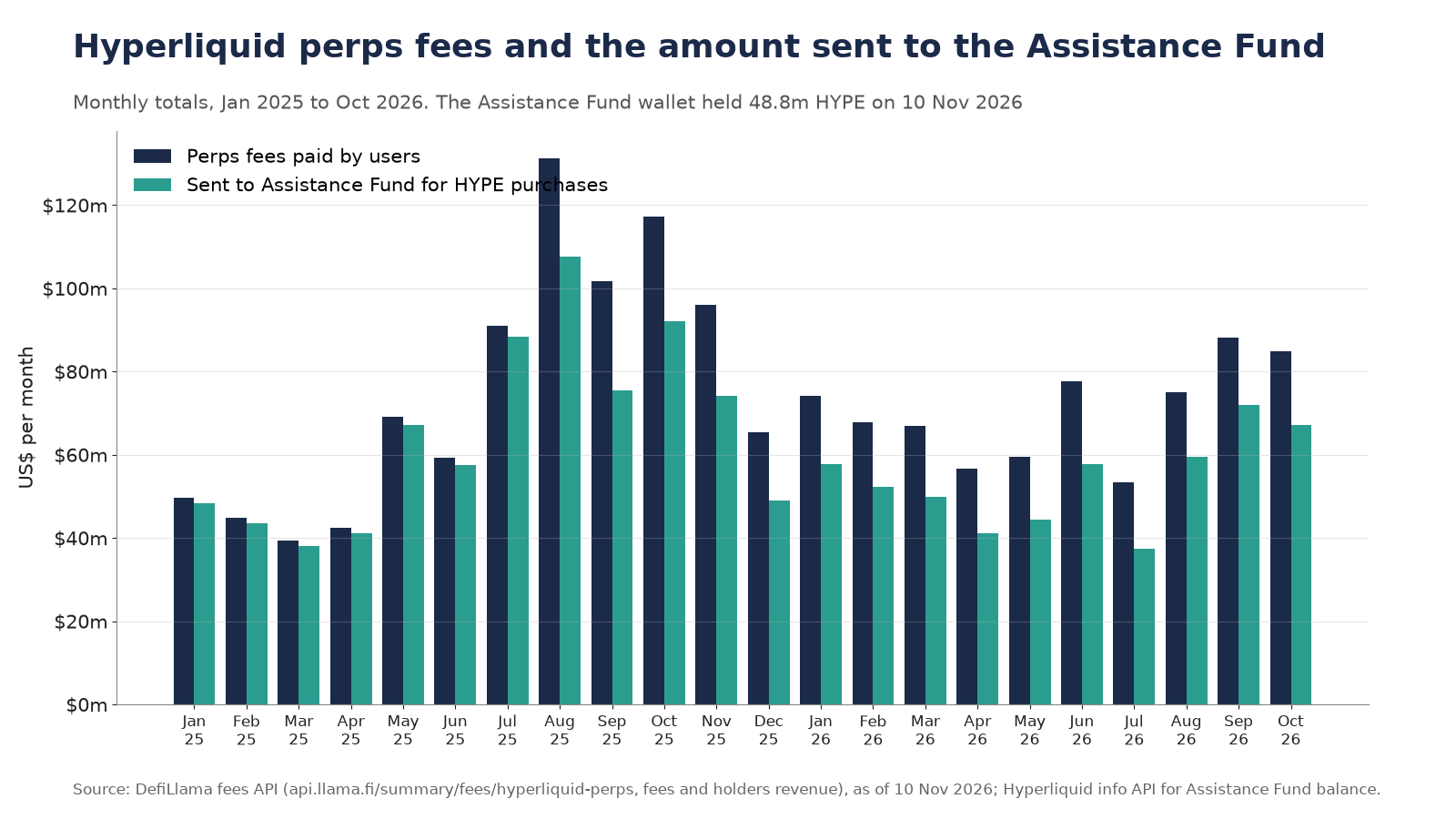
The economic flywheel underneath is unchanged. Hyperliquid’s Assistance Fund still routes the bulk of exchange fees into open-market purchases of HYPE. That is a mechanical bid funded by usage rather than mood, the cash-flow logic we described in Beyond Beta. A regulated onshore channel that widens who can touch HIP-3-style products is, if it ships, another source of that usage and another avenue for growth.
The bigger picture
Two strands meet. First, HIP-3 is still unbundling the listings business of a derivatives exchange. “CME spends years getting a new product approved; Hyperliquid lets a market emerge in an afternoon.” Permissionless deployment created Trade[XYZ]; that product velocity created a partner ICE could not ignore. What began as a crypto perpetual DEX is looking more like a general-purpose trading stack.
Second, traditional finance is starting to build on these rails too. The same week, Hong Kong’s SFC approved 24/7 secondary trading of tokenised money-market funds on a licensed platform, and DTCC’s Tokenization Service went live for DTC-custodied securities. Tokenisation and perpification remain different tools; both are now being taken seriously.
After the midterms
Democrats won both chambers of Congress, holding 254 House seats to 162 with 19 races uncalled as of 9 November. They take office on 3 January 2027, and Trump remains president until January 2029. Congress can hold hearings, attach conditions to funding bills and, through the Senate, block SEC and CFTC nominees. It cannot reverse agency decisions on its own, and Congressional Review Act disapprovals face set deadlines and a presidential veto. Statutes are the safest ground. The GENIUS Act is stablecoin law, while the CLARITY Act stalled in the Senate and would have to start again under chairs expected to include Elizabeth Warren and Maxine Waters. SEC guidance and enforcement priorities can change with new commissioners, but final rules need formal rulemaking, and Coinbase’s case was dismissed with prejudice. ICE’s venue still needs approval for its market, clearing and leveraged retail access. A sceptical Congress can delay that, but it would need a new law to block it.
Approval risk is first. Without CFTC clearance, and the surrounding broker and clearing permissions, the venue stays a press release.
Closing the loop
In April we argued that the interesting questions about perpetuals were no longer whether the wrapper works, but how far up the asset stack it climbs and how it interacts with the regulatory architecture of established markets. ICE’s answer, for now, is: far enough that the parent of the New York Stock Exchange will stake its clearing brand on Hyperliquid’s rails, and carefully enough that the whole thing waits on Washington.
The arc from May’s lobbying letter to October’s partnership is the story. Hyperliquid became a problem for the incumbents because it worked. The rational response, eventually, was not only to regulate it, but to use it.
Disclaimer: Apollo Crypto holds HYPE. This material is for general information only and is not financial advice. It does not take into account your investment objectives, financial situation or needs. Past performance is not indicative of future returns. Nothing here is an offer or solicitation to buy or sell any security or financial product.

Quinn Papworth
Quinn holds a Bachelor of Business from RMIT, majoring in Finance & Blockchain Enabled Business and has 4 years experience actively investing in crypto markets. Quinn is an analyst at Apollo Crypto and is deeply passionate about producing accessible crypto research content to help educate and onboard users.