
categories
All Categories
- Bitcoin
- Centralised Exchanges
- Crypto
- Crypto Asset Volatility
- Crypto Correlations
- Crypto Governance
- Crypto in the Portfolio
- Crypto Valuations
- DeFi
- ESG
- Ethereum
- Investment Highlight
- Regulation
- Security and Privacy
- Social Media Influence
- Stable Coins
- Traditional Finance and Crypto
- Uncategorized
- UNSDG
- Web 3.0
Authors
All Authors
Programmable Privacy: Crypto’s Next Chapter?
by Quinn Papworth
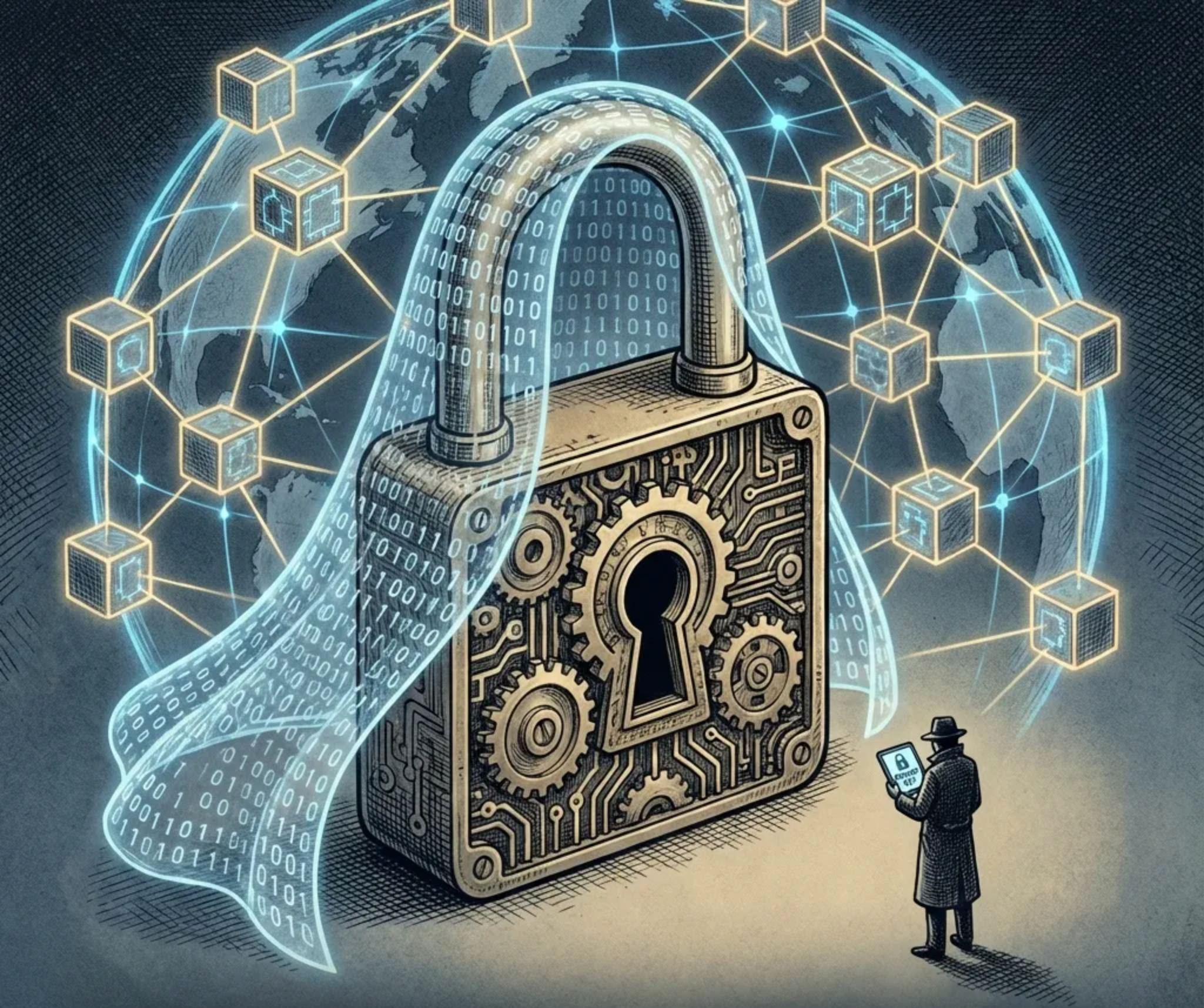
Transparency was once heralded as blockchain’s chief virtue, a welcome antidote to the pervasive opacity of traditional financial rails. And to this day the use of an immutable public ledger still serves admirably as a mechanism for establishing trust without intermediaries. However, more than a decade on from crypto’s inception, the industry is beginning to chafe against the limits of radical transparency, with many participants seeking more nuanced privacy options. Chain analysis firms can now trace wallets with ease and AI tools can profile an individual’s entire onchain financial life from something as simple as a coffee purchase. As trillions of dollars in real world assets prepare to migrate onto blockchains, the question is no longer whether privacy matters, but which form of privacy will prevail.
The History of Crypto Privacy
The trajectory of cryptographic privacy mirrors that of many emerging technologies: a burst of early innovation, a predictable backlash, and, eventually, the steady refinement and co-opting of the underlying tools.
Phase 1: Privacy Coins 2014-2018 (Ring Signatures, Shielded/stealth addresses, ZK-snarks)
- This era saw projects such as Monero and ZCash take the lead, deploying tools like ring signatures to muddle transactions with decoys and shielded or stealth addresses to obscure ownership. It also ushered in some of the earliest uses of zk-SNARKs in crypto, if still burdened by some additional trust assumptions. While often flawed in their early days these projects provided significant privacy improvements for users over Bitcoin.
Phase 2: Mixers (Tornado Cash)
- During this period privacy moved off chain with mixing services, the most infamous being Tornado Cash. Mixers pool funds and break linkage to certain wallets. Regulators responded with sanctions, delisting and criminal prosecutions, which culminated in the US government’s unprecedented decision to blacklist lines of code.
Phase 3: Programmable Privacy ( ZK + Selective disclosure)
- Since 2024 we have seen a more sophisticated era of privacy emerge enabled by modern ZK proofs, allowing for compliance with laws without revealing underlying transactions. This has allowed selective disclosure to emerge as an option for practical privacy infrastructure.
Why Now?
In short there are two major contributing factors
- the regulatory winds have shifted more and more favourably towards supporting privacy in the last 12 months
- There is increased demand for privacy among crypto market participants
We have seen the US soften its policy stance towards privacy, in March 2025, OFAC lifted its sanctions on Tornado Cash, bowing to a Fifth Circuit ruling the previous November that the agency had overreached by blacklisting immutable smart contracts, the court noted code cannot be a ‘person’. Additionally we have seen Europe’s MiCA regime permit privacy-enhancing technologies given they are allowed warranted access. For many users, however, that caveat remains a bridge too far.
There is increased interest in privacy among both institutional participants and retail users in crypto. Institutional users seek privacy as some types of institutional tokenisation is virtually impossible on fully transparent chains. No pension fund or central bank will settle or issue fully onchain if every position is visible to competitors and hedge funds. Meanwhile retail users seek privacy as well as catalysts such as AI supercharged chain surveillance and increased government surveillance have increased fears of transparent blockchains becoming vehicles for being doxxed (publication of identifying information about a particular individual on the internet).
Two Visions For Privacy
It is evident that resultantly the market will likely split into two competing models for privacy, one that focuses on full anonymity and another that focuses on programmable privacy.
| Full Anonymity | Programmable Privacy | |
| Core Technology | Ring signatures, bulletproofs | ZK proofs, stealth addresses, privacy pools |
| Regulatory Reception | Hostile | Tolerated, perhaps encouraged in particularly compliant |
| Primary Users | Retail libertarians | Institutions, compliant DeFi, RWAs |
| Predicted Fate | Survives underground | Becomes regulated infrastructure |
The Domestication Thesis
The thesis is simple, like all useful technology governments likely won’t kill privacy tech but instead will want to co-opt it. They want to control it, standardize it, and make it auditable.
Once they can do that, they will accelerate its adoption faster than cypherpunks alone have been able to.
The Historical Precedent:
| Technology | Wild Phase (banned/feared) | Domesticated Phase (Adopted) |
| Strong Encryption | 1990s “crypto wars”, export bans | Became mandatory (HTTPS, Signal Protocol, iMessage) |
| Tor | “Only criminals use it” | U.S. military funds it; journalists rely on it |
| Bitcoin | 2013–2018 “drug money” | 2024–2025 ETFs, nation-state reserves |
| Privacy Coins/mixers | 2020–2024 delistings, Tornado Cash sanctions | 2025, OFAC sanction dropped against TCash, selective delistings reversed, ETF filings for ZCash |
Acceptable privacy to governments will likely be tameable and will lean more towards the ‘programmable privacy’ category we outlined above with potential features such as selective disclosure using ZK proofs, view keys to decrypt specific flows, freezable assets etc.
Ethereum’s Coming Upgrade
Vitalik Buterin, Ethereum’s co-founder, has outlined a strikingly modest yet effective roadmap for base-layer privacy in his forum post on Ethereum Magicians. Rather than overhaul the protocol, it relies on stealth addresses, private mempools, and new standards such as EIP-7701. A new toolkit named Kohaku is being integrated into mainstream wallets. Buterin expects usable private transactions by default, not exception in all Ethereum based wallets by late 2026.
The Risks
However it isn’t all smooth sailing, significant hurdles still persist. Shielded transactions are slower and costlier. Zero-knowledge provers could become points of centralisation. Some jurisdictions may still outlaw full anonymity and the tired refrain that “privacy is for criminals” retains political potency among the uninitiated. Yet these are engineering and political challenges, not existential ones. The economic logic is undeniable: trillions of dollars cannot live entirely transparent on glass ledgers.
Conclusion – Privacy is Infrastructure
In 2017 we wanted decentralisation. In 2021 we wanted scalability. In 2026 we will demand privacy.
The chains that solve privacy at scale will inherit the trillions coming from TradFi and real world assets. Not as an ideological statement, but as the basic plumbing which without the next wave of financial innovation cannot function. The teams that do this in a form that regulators can audit and institutions can trust while still protecting users, will likely be the biggest winners.

Quinn Papworth
Quinn holds a Bachelor of Business from RMIT, majoring in Finance & Blockchain Enabled Business and has 4 years experience actively investing in crypto markets. Quinn is an analyst at Apollo Crypto and is deeply passionate about producing accessible crypto research content to help educate and onboard users.